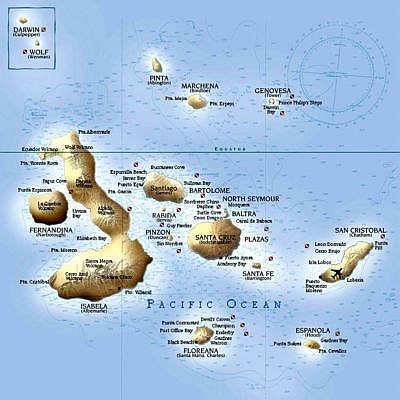
Sunday: Flight to Galápagos - Baltra Island - Santa Cruz - Las Bachas Beach
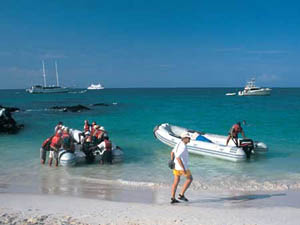
Morning arrival on Baltra Island where you firstly will pay the National Park Entrance Fee before you will be met by your guide and be transferred to the dock to board the boat. Here you will start your cruise. In the afternoon you will visit the long sandy “Las Bachas” Beach. Here you encounter sea lions, herons and marine iguanas and with good luck penguins. You also have the opportunity to swim offshore of this soft white sand beach. Snorkelling enthusiasts can explore the fascinating underwater world as well. L, D
 Monday: North Semour Island - Santa Fe Island
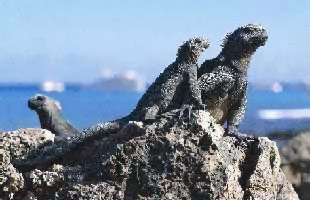
After a dry landing, you will have a short walk along the coast of the northernmost island of Seymour. Guests will encounter swallow-tailed gulls, sea lions and cliff crabs. This site is also known for being a major nesting colony of blue footed boobies, and the largest colony of the magnificent frigate bird, a species different to the great frigate bird. You can also spot both endemic species of iguanas, the marine iguanas and land iguanas. You will enjoy this relaxing hike around the nesting sites. Today you visit Santa Fe Island, a small rocky peninsula which is covered by little Palo Santo trees and by up to 6m high opuntia cacti. Inhabitants of this island are a specific species of large yellow land iguanas, the Galápagos buzzard, some blue footed boobies and pelicans. After the hike you can swim or snorkel in the bay in company of sea lions and marine turtles. Finally you can observe the tropic underwater world. B, L, D
Tuesday: Española Island - Suarez Point - Gardner Bay
Española is the southernmost and oldest island of the Galápagos archipelago. Because of its isolated position you can explore a lot of endemic wildlife. In the morning you will have an excursion to Point Suarez which is one of the most outstanding wildlife areas of the archipelago, with a long list of species found along its cliffs and sand or pebble beaches. In addition to five species of nesting seabirds there are the curious and bold Española Island mockingbirds, Galapagos doves and Galapagos hawks. Several types of reptiles, including the marine iguana and the oversized lava lizard, are unique to this island. When heavy swells are running, Point Suarez is also the site of a spectacular blow hole, with thundering spray shooting 30 yards into the air. The walkabout on a stony path is about 2km (duration about 3 hours). Gardner Bay is on the eastern shore with turquoise shot colored water and a magnificent beach. Around the small islets nearby, snorkelers will find lots of fish and sometimes turtles and sharks. The bay is also frequented by a transient colony of sea lions which like to swim with you. Birds, like the endemic Hood-Mockingbird and different species of Darwin finches, are omnipresent. B, L, D
Wednesday: Floreana Island - Comorant Point - Post Office Bay
Floreana Island is perceived as one of the most exotic Island of the archipelago. At Cormorant Point you land on a green olivine sand beach. Following a 100 m long path you will soon reach a lagoon with flamingoes, white-checked pintail ducks and other shorebirds. Afterwards you will visit the famous Post Office Bay which keeps the legendary post barrel that whalers historically used to post their mail in. Nowadays you can leave a letter and hope that it will make its destination via another tourist. B, L, D
Thursday: Santa Cruz Island - Charles Darwin Station - Highlands
Today you anchor at the harbour of Puerto Ayora on Island Santa Cruz. Beside its rank as homestay for sea lions and pelicans, the marina is a popular starting point for round-the-world-yachtsman. The island itself has come to be both touristic and scientific center of the archipeleago. 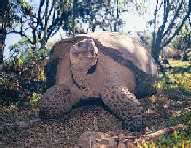 The Charles Darwin Research Station and the Galapagos National Park offices are based on Santa Cruz Island. The station encompasses an information centre, a museum, a library and the tortoise breeding station as well. Here you will have an opportunity to visit some of the best scientists of the Galápagos. Park rangers and park managers among others, who make huge efforts to preserve this Unesco World Heritage Site, conduct the conservation of the islands. In the tortoise breeding and rearing centre you can encounter tortoises of different subspecies, which are prepared for reintroduction to their natural habitats. The most popular inhabitant of this island is probably Lonesome George. He is the only survivor of his specific turtle species. In the past all approaches to find a partner for him failed. But in July 2008 the scientists found a carved nest wit nine eggs from a female tortoise. Three of them could be saved and now accordingly to strict instrcuctions they are incubated synthetic. In the afternoon you will visit the highlands of Santa Cruz. The lush landscape there is a welcome contrast to the arid scenery of the smaller, lower islands. On your way you will cross the different zones of vegetation, from the dry lower region full of cactuses to the woods of scalesia in the higlands. B, L, D
Friday: Santiago Island - Egas Port - Bartolomé Island
Today you will land at Santiago Island, also known as James, or San Salvador Island, which is the fourth largest island in the archipelago.  The influences of the former salt mine workers and their imported animals are still alive on the island. The last tries to populate Santiago Island were given up forty years ago. Visit the dark sand beach with a lot of marine iguanas at Egas Port after a wet landing. After a short walk of about 2 km along the coast you will reach the cliffy lava coast with natural pools where sea lions take a bath and herons and other sea birds are as well local. Additionally you can encounter a small group of sea bears. The surrounding area is good for spotting and observing colonies of sea lions, red sally light-foot crabs, lava iguanas, Galápagos buzzards and lava herons. Arriving at Bartolomé you will ascend a lookout point from where you can admire the spectacular panorama of the Sullivan Bay and the famous needle shaped rock, the so called Pinnacle Rock. The beaches at the foot of the Pinnacle Rock boast some fine snorkeling spots from which you can discover the marvelous underwater world with a good chance to encounter penguins or the softly gliding turtles. B, L, D
Saturday: Genovesa Island - Prince Philip’s Steps - Darwin Bay
Your destination for today is Genovesa Island. Genovesa is considered as one of the wildest and untouched within the National Park of Galápagos. It is also known as “Bird Island” or “Tower Island”.  On your way to this island you will cross the equator. After a panga ride along the cliffs of Genovesa Island you will make a dry landing at Prince Philip’s Steps, a carved out of stone stair. This will lead you to a wide plateau, where you can observe large colonies of masked boobies, frigate birds, storm petrels and bahama ducks. During this easy stroll you will cross a little Scalesia wood, in which you can observe the short-eared owl. The same path will lead you back to your boat. After lunch make a wet landing onto Tower Island at Darwin Bay for an easy stroll observing seemingly thousands of birds, mainly frigate and red footed and masked boobies. On the beach you can see the interesting spectacle how the frigates try to catch the prey of the boobies. B, L, D
Sunday: Santa Cruz Island - Black Turtle Cove - Baltra Island- Flight back to mainland
In the morning you visit the nearby Black Turtle Cove, a nesting site for marine turtles. With good luck you can observe different types of sharks in the calm water, so for example the white-tipped shark or schools of golden mustard rays as well. Afterwards you will be escorted to the airport on Baltra island from where you will fly back to the Ecuadorian mainland. B
B: Breakfast / L: Lunch / D: Dinner
Sunday: Flight to Galápagos - Baltra Island - Santa Cruz - Las Bachas Beach
Morning arrival on Baltra Island where you firstly will pay the National Park Entrance Fee before you will be met by your guide and be transferred to the dock to board the boat. Here you will start your cruise. In the afternoon you will visit the long sandy “Las Bachas” Beach. Here you encounter sea lions, herons and marine iguanas and with good luck penguins. You also have the opportunity to swim offshore of this soft white sand beach. Snorkelling enthusiasts can explore the fascinating underwater world as well. L, D
 Monday: North Semour Island - Santa Fe Island
After a dry landing, you will have a short walk along the coast of the northernmost island of Seymour. Guests will encounter swallow-tailed gulls, sea lions and cliff crabs. This site is also known for being a major nesting colony of blue footed boobies, and the largest colony of the magnificent frigate bird, a species different to the great frigate bird. You can also spot both endemic species of iguanas, the marine iguanas and land iguanas. You will enjoy this relaxing hike around the nesting sites. Today you visit Santa Fe Island, a small rocky peninsula which is covered by little Palo Santo trees and by up to 6m high opuntia cacti. Inhabitants of this island are a specific species of large yellow land iguanas, the Galápagos buzzard, some blue footed boobies and pelicans. After the hike you can swim or snorkel in the bay in company of sea lions and marine turtles. Finally you can observe the tropic underwater world. B, L, D
Tuesday: Española Island - Suarez Point - Gardner Bay
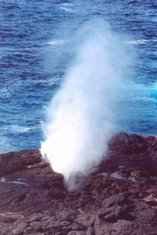 Española is the southernmost and oldest island of the Galápagos archipelago. Because of its isolated position you can explore a lot of endemic wildlife. In the morning you will have an excursion to Point Suarez which is one of the most outstanding wildlife areas of the archipelago, with a long list of species found along its cliffs and sand or pebble beaches. In addition to five species of nesting seabirds there are the curious and bold Española Island mockingbirds, Galapagos doves and Galapagos hawks. Several types of reptiles, including the marine iguana and the oversized lava lizard, are unique to this island. When heavy swells are running, Point Suarez is also the site of a spectacular blow hole, with thundering spray shooting 30 yards into the air. The walkabout on a stony path is about 2km (duration about 3 hours). Gardner Bay is on the eastern shore with turquoise shot colored water and a magnificent beach. Around the small islets nearby, snorkelers will find lots of fish and sometimes turtles and sharks. The bay is also frequented by a transient colony of sea lions which like to swim with you. Birds, like the endemic Hood-Mockingbird and different species of Darwin finches, are omnipresent. B, L, D
Wednesday: Floreana Island - Comorant Point - Post Office Bay
Floreana Island is perceived as one of the most exotic Island of the archipelago.At Cormorant Point you land on a green olivine sand beach.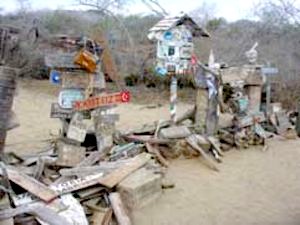 Following a 100 m long path you will soon reach a lagoon with flamingoes, white-checked pintail ducks and other shorebirds. Afterwards you will visit the famous Post Office Bay which keeps the legendary post barrel that whalers historically used to post their mail in. Nowadays you can leave a letter and hope that it will make its destination via another tourist. B, L, D
Thursday: Santa Cruz Island - Charles Darwin Station - Highlands
Today you anchor at the harbour of Puerto Ayora on Island Santa Cruz. Beside its rank as homestay for sea lions and pelicans, the marina is a popular starting point for round-the-world-yachtsman. The island itself has come to be both touristic and scientific center of the archipeleago. The Charles Darwin Research Station and the Galapagos National Park offices are based on Santa Cruz Island. The station encompasses an information centre, a museum, a library and the tortoise breeding station as well. Here you will have an opportunity to visit some of the best scientists of the Galápagos. Park rangers and park managers among others, who make huge efforts to preserve this Unesco World Heritage Site, conduct the conservation of the islands. In the tortoise breeding and rearing centre you can encounter tortoises of different subspecies, which are prepared for reintroduction to their natural habitats. The most popular inhabitant of this island is probably Lonesome George. He is the only survivor of his specific turtle species. In the past all approaches to find a partner for him failed. But in July 2008 the scientists found a carved nest wit nine eggs from a female tortoise. Three of them could be saved and now accordingly to strict instrcuctions they are incubated synthetic. Afterwards you will be escorted to the airport on Baltra island from where you will fly back to the Ecuadorian mainland. B
B: Breakfast / L: Lunch / D: Dinner
Thursday: Santa Cruz Island - Charles Darwin Station - Highlands
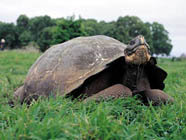
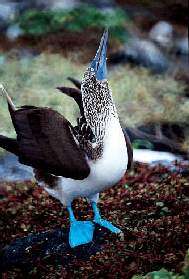 Morning arrival on Baltra Island where you firstly will pay the National Park Entrance Fee before you will be met by your guide and be transferred to the dock to board the boat. Here you will start your cruise with a visit to the Charles Darwin Research Station. Today you anchor at the harbour of Puerto Ayora on Island Santa Cruz. Beside its rank as homestay for sea lions and pelicans, the marina is a popular starting point for round-the-world-yachtsman. The island itself has come to be both touristic and scientific center of the archipeleago. The Charles Darwin Research Station and the Galapagos National Park offices are based on Santa Cruz Island. The station encompasses an information centre, a museum, a library and the tortoise breeding station as well. Here you will have an opportunity to visit some of the best scientists of the Galápagos. Park rangers and park managers among others, who make huge efforts to preserve this Unesco World Heritage Site, conduct the conservation of the islands. In the tortoise breeding and rearing centre you can encounter tortoises of different subspecies, which are prepared for reintroduction to their natural habitats. The most popular inhabitant of this island is probably Lonesome George. He is the only survivor of his specific turtle species. In the past all approaches to find a partner for him failed. But in July 2008 the scientists found a carved nest wit nine eggs from a female tortoise. Three of them could be saved and now accordingly to strict instrcuctions they are incubated synthetic. In the afternoon you will visit the highlands of Santa Cruz. The lush landscape there is a welcome contrast to the arid scenery of the smaller, lower islands. On your way you will cross the different zones of vegetation, from the dry lower region full of cactuses to the woods of scalesia in the higlands. B, L, D
Friday: Santiago Island - Egas Port - Bartolomé Island
 Today you will land at Santiago Island, also known as James, or San Salvador Island, which is the fourth largest island in the archipelago. The influences of the former salt mine workers and their imported animals are still alive on the island. The last tries to populate Santiago Island were given up forty years ago. Visit the dark sand beach with a lot of marine iguanas at Egas Port after a wet landing. After a short walk of about 2 km along the coast you will reach the cliffy lava coast with natural pools where sea lions take a bath and herons and other sea birds are as well local. Additionally you can encounter a small group of sea bears. The surrounding area is good for spotting and observing colonies of sea lions, red sally light-foot crabs, lava iguanas, Galápagos buzzards and lava herons. Arriving at Bartolomé you will ascend a lookout point from where you can admire the spectacular panorama of the Sullivan Bay and the famous needle shaped rock, the so called Pinnacle Rock. The beaches at the foot of the Pinnacle Rock boast some fine snorkeling spots from which you can discover the marvelous underwater world with a good chance to encounter penguins or the softly gliding turtles. B, L, D
 Saturday: Genovesa Island - Prince Philip’s Steps - Darwin Bay
Your destination for today is Genovesa Island. Genovesa is considered as one of the wildest and untouched within the National Park of Galápagos. It is also known as “Bird Island” or “Tower Island”. On your way to this island you will cross the equator. After a panga ride along the cliffs of Genovesa Island you will make a dry landing at Prince Philip’s Steps, a carved out of stone stair. This will lead you to a wide plateau, where you can observe large colonies of masked boobies, frigate birds, storm petrels and bahama ducks. During this easy stroll you will cross a little Scalesia wood, in which you can observe the short-eared owl. The same path will lead you back to your boat. After lunch make a wet landing onto Tower Island at Darwin Bay for an easy stroll observing seemingly thousands of birds, mainly frigate and red footed and masked boobies. On the beach you can see the interesting spectacle how the frigates try to catch the prey of the boobies. B, L, D
Sunday: Santa Cruz Island - Black Turtle Cove - Baltra Island - Flight back to mainland
In the morning you visit the nearby Black Turtle Cove, a nesting site for marine turtles. With good luck you can observe different types of sharks in the calm water, so for example the white-tipped shark or schools of golden mustard rays as well. Afterwards you will be escorted to the airport on Baltra island from where you will fly back to the Ecuadorian mainland. B
B: Breakfast / L: Lunch / D: Dinner